An agent demo proves that a loop can work.
It does not prove that a product exists.
The product starts when people can use the agent repeatedly, trust its context, understand what it did, and recover when something goes wrong.
That means the boring parts become the important parts:
- agreed domain vocabulary, relationships, and evidence
- human-owned intents and acceptance scenarios
- stakeholder responsibilities and decision ownership
- runtime hosting
- session routing
- persona behavior
- knowledge grounding
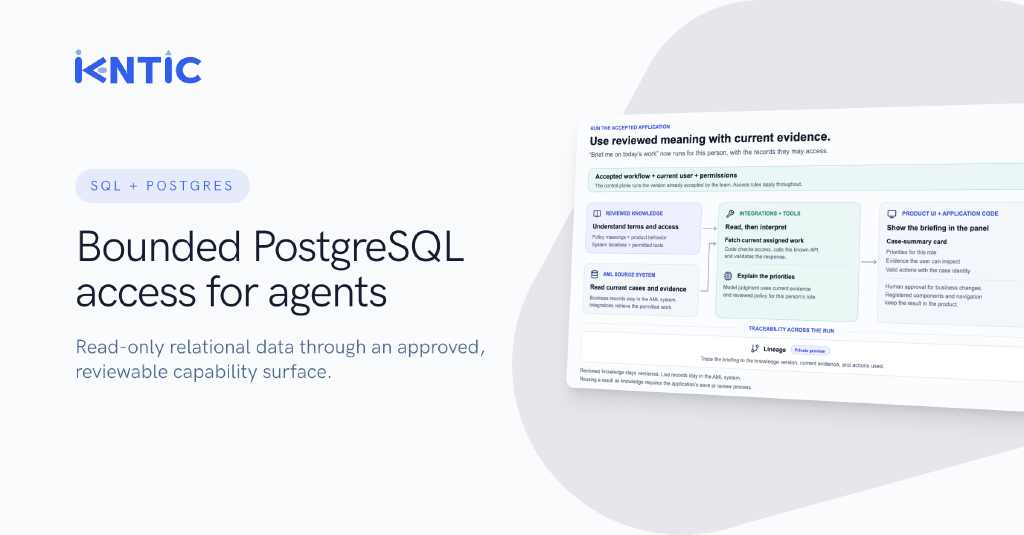
- tool boundaries
- logs and traceability
- evidence and review
- deployment controls
Those are not afterthoughts. They decide whether the agent survives contact with real users.
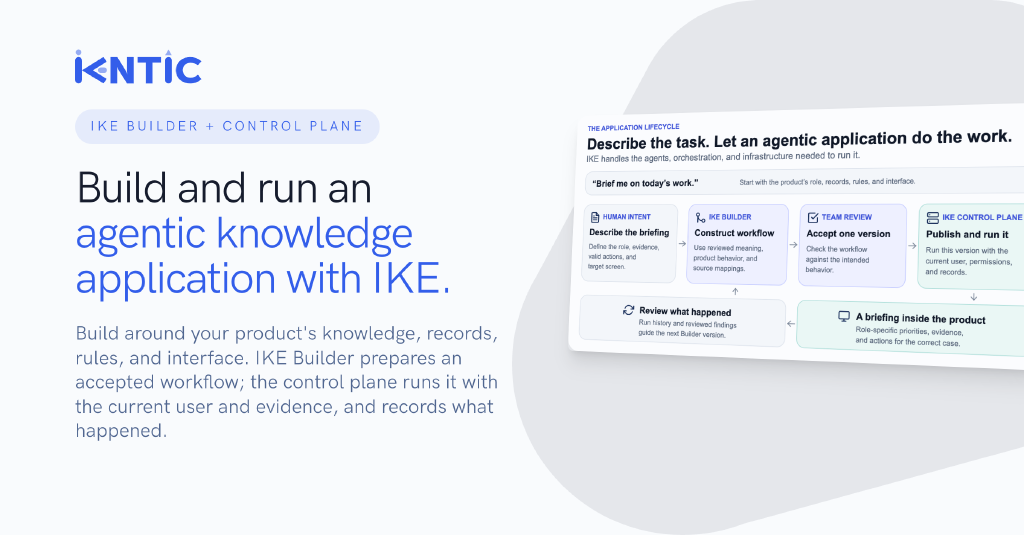
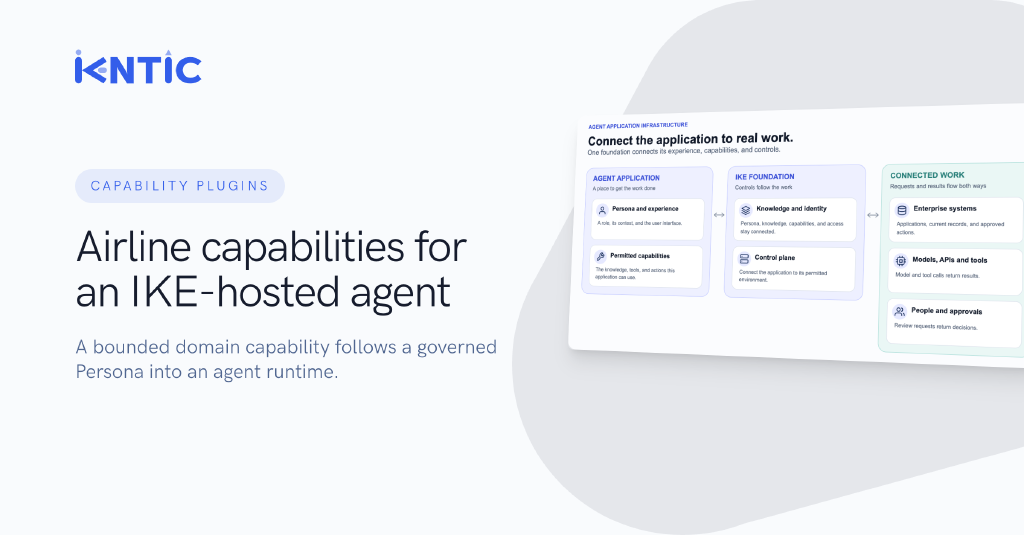
Hosted OpenClaw is one concrete way to try and operate that foundation. It is the first Smart Agent framework in IKE. It runs the full OpenClaw installation on dedicated resources while IKE adds Personas, Collections, Skills, Tools, Permissions, authentication, and shared access. The same foundation can support conversation or a knowledge application embedded in an existing product.
An application build may instead begin with an SME’s idea, a prototype, or data. The builder journey starts by establishing meaning, then agreeing intents and composing the experience. Runtime infrastructure supports that work; users still need evidence that the application helps them accomplish it.
The platform matters once the agent starts carrying real work.
Start 7-day trial