Prompts are useful.
They are not enough to operate an agent.
A prompt can shape one interaction. A persona gives the agent a reusable behavior contract across sessions and workflows.
In Ikentic, personas carry the agent’s operating instructions:
- role
- tone
- response discipline
- default knowledge scope
- default skills
- boundaries
- review expectations
That matters for builders because it makes the agent feel less generic. It matters for teams because it creates something they can version, compare, and review.
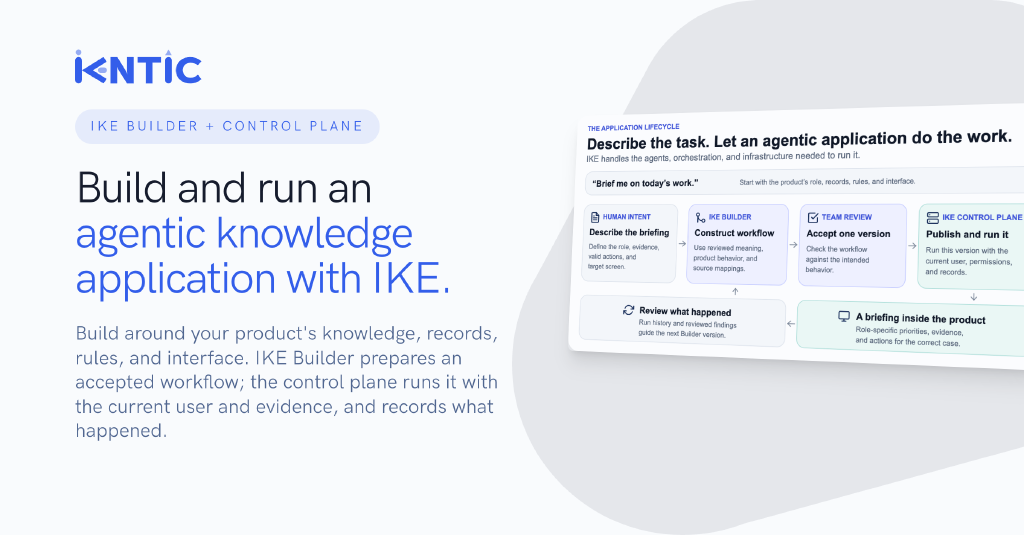
In a knowledge application, the Persona follows the SME method and the application’s human-owned intents. Establish the vocabulary, evidence, responsibilities, and expected outcomes first, then describe the agent’s role within that work. A Persona’s instructions do not grant permissions; application policy, configured capabilities, and runtime access checks determine what it may use.
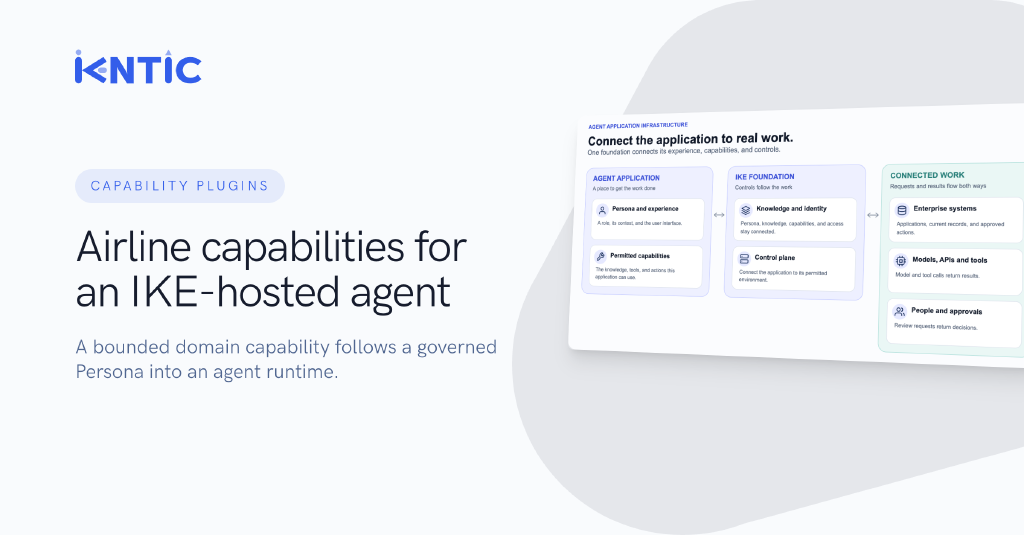
The Persona keeps the agent’s role, behavior, knowledge, capabilities, and boundaries together. Use it in a Direct Agent conversation on IKE’s shared, scoped service, give it dedicated Smart Agent resources, or build it into a purpose-built Agent Application.
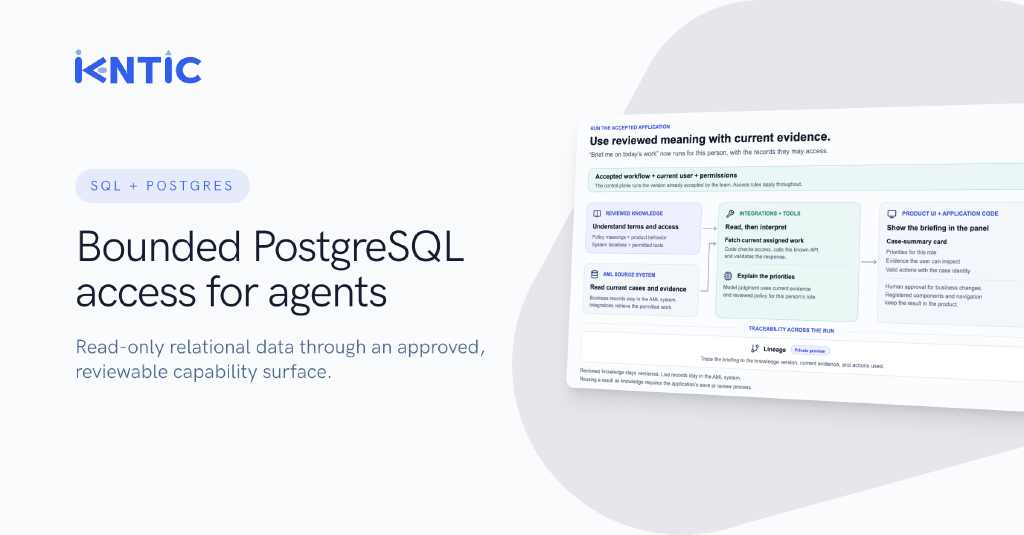
See how an IKE knowledge application fits together for the relationship between Persona behavior, domain knowledge, intents, integrations, and the user experience.
Start free